Bio-Chlor delivers long-term success for Stirling Dairy Farm
by Arm & Hammer TeamMeldrum farm in Scotland is home to the 930 cow Hawksland dairy herd owned by David and Carolyn Hamilton and managed by Doug McMillan and David Montgomery. They were one of the first farms to adopt Bio-Chlor 25 years ago and haven't looked back since.
Before feeding Bio-Chlor, the farm would feed low calcium minerals in transition but were still administering bottles of calcium after calving, too many for herd manager Doug McMillan's liking. “The cost and time involved treating animals was too much, we needed to try something different,” said Doug, who's managed the herd for 25 years.
Archie Leitch, from Almins Ltd, suggested feeding Bio-Chlor from Arm & Hammer to achieve a negative Dietary Cation Anion Difference (DCAD) diet and reduce the prevalence of milk fever in the herd.
At that time, Bio-Chlor was very new to the UK market, said Archie, who is the Scottish distributor for Arm & Hammer. However, even back then Negative DCAD diets were well researched and Bio-Chlor fitted really easily into the dry cow system at Meldrum Farm.
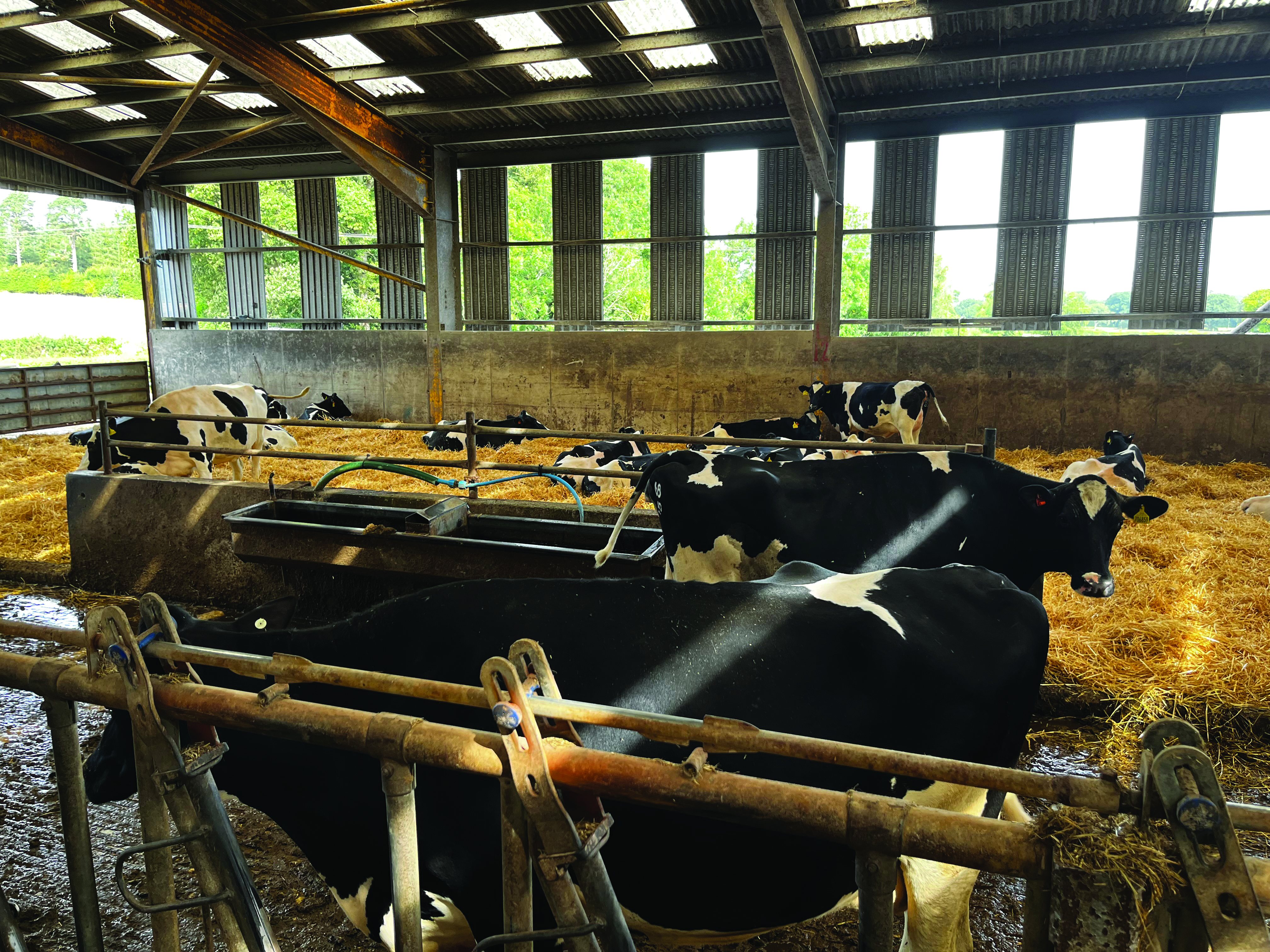
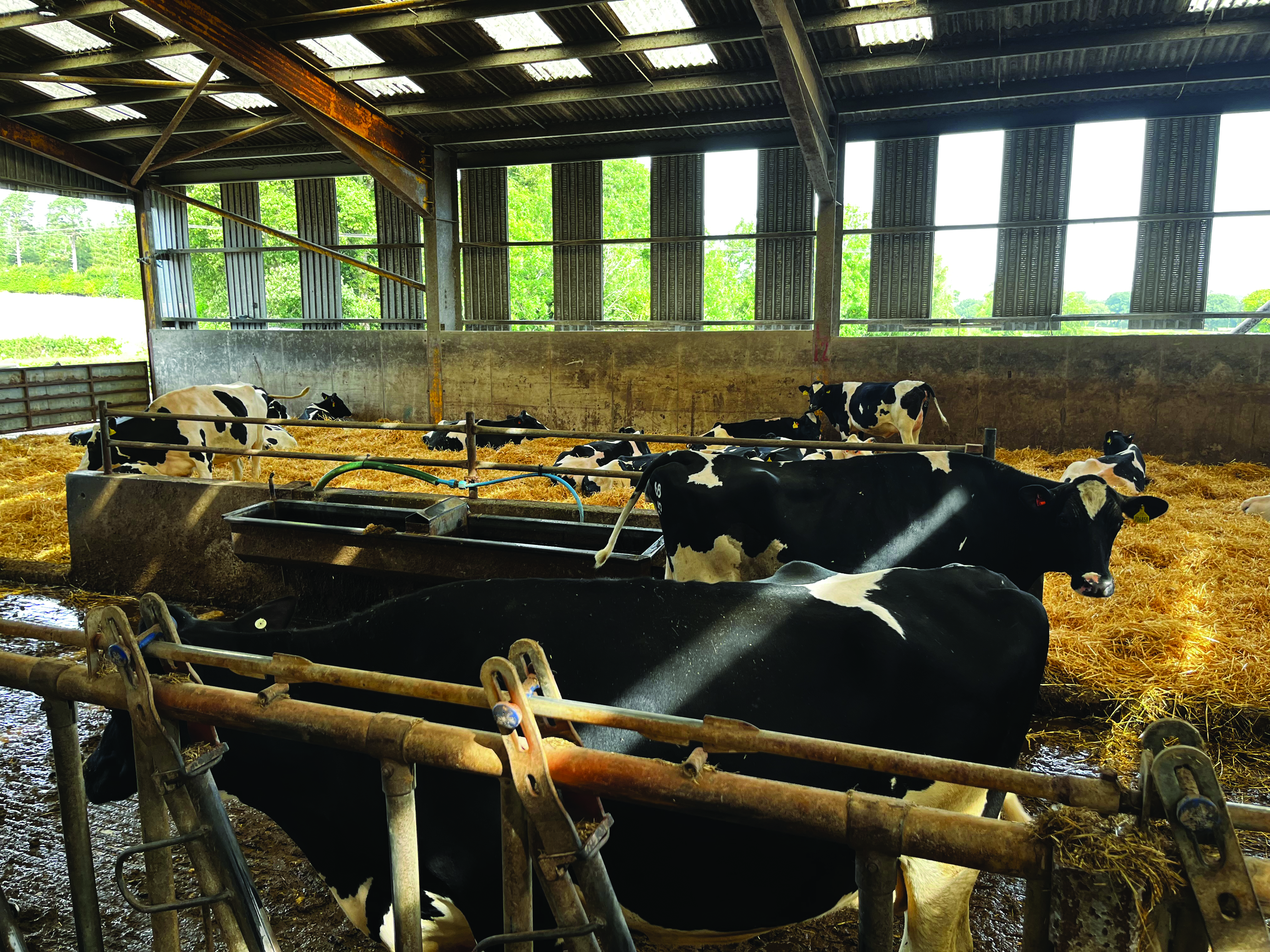
The herd operates a two-stage dry cow period, targeting 45 days dry and averaging 18 to 19 days in the close-up group. Here, they are fed a diet containing straw, third cut grass silage, ground barley, Supergrains (moist wheat by-product of the distillery industry), soya bean meal, protected Choline, minerals and 700 grams of Bio-Chlor.
The diet is altered to achieve the correct acidification level based on results from closely monitored urine pH testing. Currently, the diet is formulated to achieve -190 meq/kg of dry matter, which is stronger than their normal target as they've noticed an increase in urine pH levels since a dietary change.
We know Bio-Chlor works but attention to detail is key for success, that's why urine pH testing is used as an early warning system, explains Doug.
The herd works very closely with Glasgow Vet School, who assist with the monitoring as well as regular KPI benchmarking. The Vet School's input has also been instrumental in achieving impressive transition success; for 764 calvings multiparous cows only, the herd achieved zero displaced abomasum's, 1% metritis, 1% milk fever, 2% ketosis and 5% retained placentas, which all contributes to an exceptional pregnancy rate of 27%.
“Cows sing on Bio-Chlor!” — David Hamilton
David Hamilton, herd owner, credits their strong team approach: “We have to rely on good staff to achieve the consistency and attention to detail to drive the business forward.”
Both David and Doug noticed that cows have better dry matter intakes after calving, leading to better start up milks and less body condition loss.
After calving, first calved heifers are managed in their own group to prevent bullying up until 180 days in milk. Maiden heifers and best cows are given three chances with sexed semen before being bred to a beef sire.
For Almins, Bio-Chlor's success is testament to Archie's strict criteria for product selection: “Not every product makes the cut, it has to translate into real results on farm. I want to see better cow health and production persistency, not just from research but results too, and we've achieved that here at Meldrum Farm,” says Archie. “Thirty years of experience and 150 farms later, Bio-Chlor still makes the grade.”
Farm facts
- Meldrum Farm, Stirling, Scotland
- 930 cows
- 13,300 305-day yield
- 3.8% butterfat and 3.4% protein
- 23 months age at first calving
- Housed all year round
- 3x milking 50 point rotary parlour