BIO-CHLOR gives 2.4 kg more milk in the tank per cow per day
by Arm & Hammer TeamThe foundations for the next lactation are laid during the dry period, therefore the cows must be dried off, cared for and fed during the dry period in an effective, simple and practical manner. This is the opinion of Peter Ladekarl Hansen, who is the operations manager for the cattle farm at Spangsbjerg I/S near Skjern.
He strives for dryoff to occur when the cows are 50 to 60 days from expected calving. High-yielding first-calvers are usually dried off 60 days before expected calving, whereas fatter, older cows are drawn 50 days before calving, Peter Ladekarl Hansen explains about the two extremes.
Phase feeding
Drying off occurs every Wednesday, when cows are confined for calving. The inseminator tests them for pregnancy just in case, and then they are confined to a far-off feed in their own box until the next day. Here they are milked again, vaccinated against rota-corona virus and, if necessary, given a dry off treatment.
The newly dried off cows continue in their own group, where they are fed a far-off ration, which primarily consists of fifth-cut grass silage, ensiled seed grass straw and heifer minerals.
Feeding with ensiled seed grass straw has been really positive. We chop it directly after the combine harvester and therefore avoid the work of getting it dry enough to be pressed into bales. It is placed in a silo, where the fifth-cut is placed on top. This allows the seed grass to absorb any juice, explains Peter Ladekarl Hansen.
The far-off dry cows are housed in cubicles with sand, which is good for udder health, and they are moved into a close-up group approximately 25 days before expected calving.
Acidification works
In the close up group, the feeding changes to a more energy-rich ration, which is characterized by large amounts of corn silage as well as soy meal and rapeseed cakes. There are dry minerals with organic selenium and the product Bio-Chlor, which acidifies the ration.
The close-up group has previously been acidified, and in the autumn of 2023 Bio-Chlor was introduced as an acidifying feed, after which the peak performance of the older fresh calvers increased by 5.5 kilos of ECM per day.
Although more milk was in the tank, they chose to stop using Bio-Chlor again because of the price of the product. But then the peak performance of the older cows fell by 3.9 kilos of ECM per day, so it had some kind of effect. So, we have been using it again since August 2024, says Peter Ladekarl Hansen and adds that there was a positive performance response again.
According to Farma Nordic and Compex, who sell Bio-Chlor, the product also results in fewer problems with retained afterbirth and milk fever after calving. We haven't seen that in our herd. But we were also low beforehand, so perhaps we couldn't expect an effect on those parameters, says Peter Ladekarl Hansen.
Must be mixed into the ration
At Farma Nordic and Compex, which distribute Bio-Chlor in Denmark, consultant Henrik Jensen says that the cost of using Bio-Chlor during the close-up period is 24.6 dollar per cow. The product should be used in a total mixed ration, and he recommends that a ration is mixed every or every other day.
In smaller herds, it may be a solution to ensile the close-up ration for 8-14 days. Bio-Chlor contains 47 percent crude protein, so another protein source can be reduced. We target urine pH between 6.0 and 6.5 to check the acidification level.
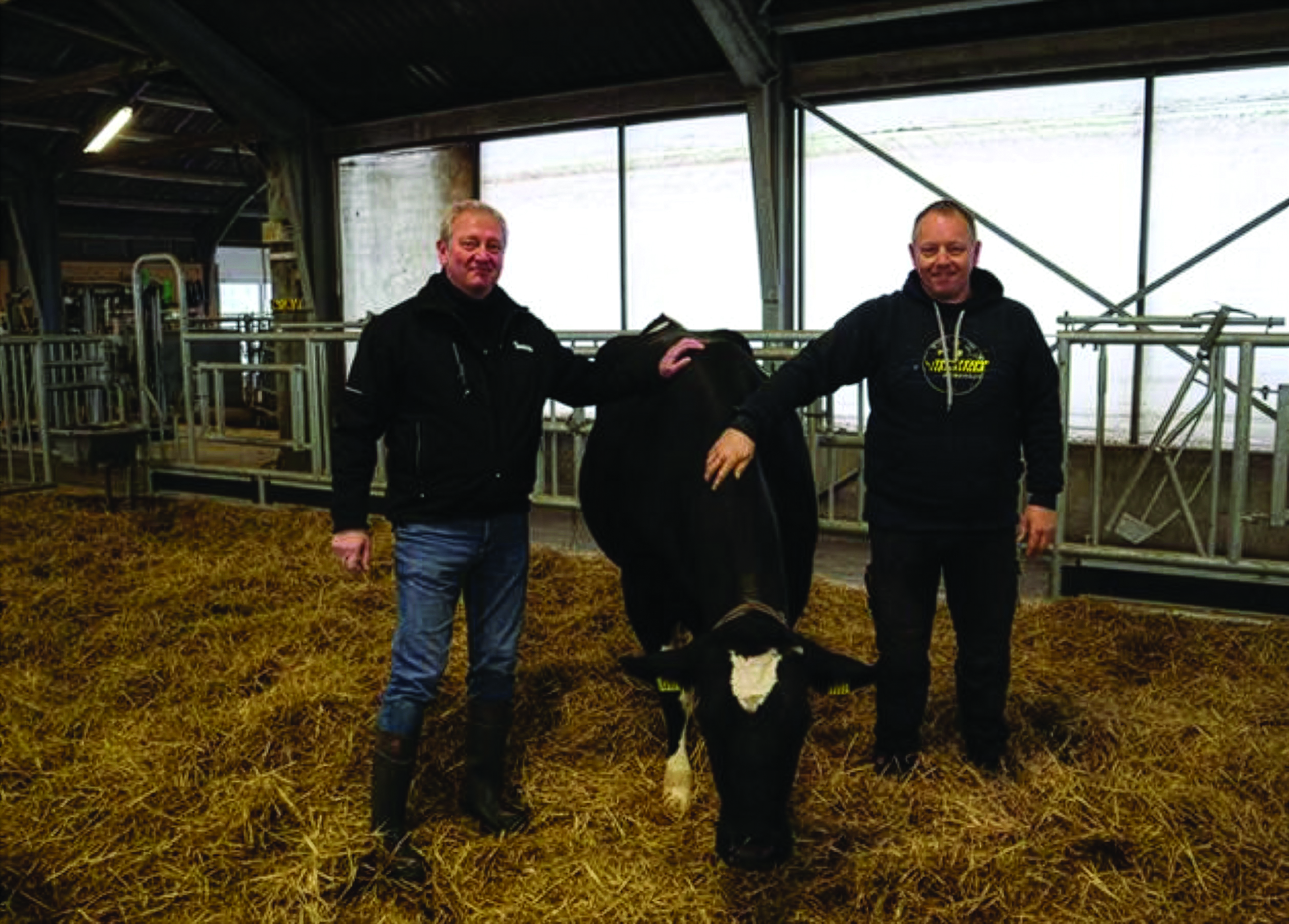
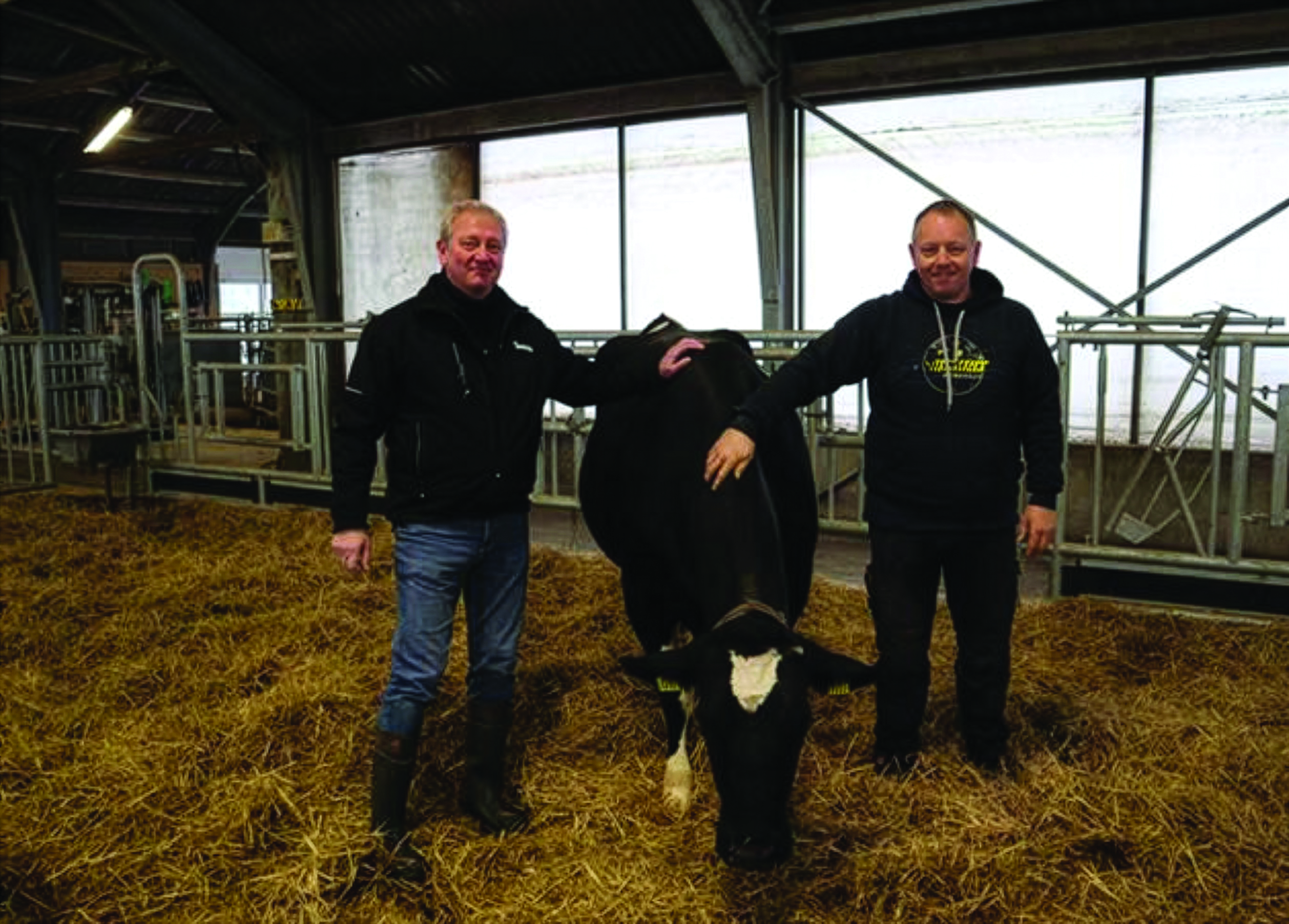
On a farm in West Jutland, Denmark, a simple dry cow system is desired. Acidification has given a higher peak yield.
Farm facts
- Spangsbjerg I/S Farm, West Jutland, Denmark
- 800 cows, of which approximately 700 are dairy cows